Launching an indie game on Xbox One cost one developer $5K (Brett Douville/Happion Labs GameDevBlog)


Techmeme

Launching an indie game on Xbox One cost one developer $5K (Brett Douville/Happion Labs GameDevBlog)

Just last month Happion Labs launched Sixty Second Shooter Prime for the Xbox One through their ID@Xbox program.



Now, I’m one of the cheapest game developers I know. I’ve been indie for almost nine years now and am still in the red, so I’ve gotten to a point where I’m loathe to spend another penny. Add to that I really had no idea how a game on the Xbox One would sell. So I wasn’t even willing to hire an artist for Sixty Second Shooter Prime (which could very well have hurt sales a lot as my logo screens were made by, well, me) so you can figure that when I approached the project I was doing it just about as frugally as possible.


So how cheap is cheap?


You might think, since Microsoft is giving away their dev kits to early adopters of the ID@Xbox program, as long as you have no offices and pay everyone with rev share you could ship a game for just about nothing. But that’s not quite the case: let's look at how our costs broke down:


Maintaining the Sixty Second Shooter URL


19


Sending the second dev kit to
 Brett Douville


63


Hardware (usb and video
 cables and the like)


72


Video capture device (for
 making trailer)


181


Localization (French,
 Spanish, Italian, Portuguese)


729


E&O Insurance


2037


Foreign ratings boards (PEGI,
 USK)


2042


Total


5143


So, about $5K. Not as cheap to make as a PC game - by a long shot.


What are those big expenses?


First: Errors & Omissions Insurance. Microsoft requires this; it’s in the contract. And it’s not just any E&O Insurance - it has to cover IP and copyright violations, so the cheap E&O Insurance you can easily find online doesn’t qualify. I went through an insurance broker (Parker, Smith, and Feek) and found the cheapest insurance that would qualify.


Second: Ratings boards.  Again, Microsoft requires this - if you want to release in a given territory, you have to get your game rated by the official ratings boards of that territory. It’s sad but true, getting your game rated in some territories can be a lot more expensive than simply translating your game to that territory’s language! I spent about $700 on localization, all told, and spent nearly $2000 on getting my game rated by PEGI and USK. (I skipped Australia and New Zealand because they both wanted around $2K for their ratings boards...maybe I’ll launch in those territories later if the game seems to be selling particularly well.)


Obviously, localization and other territories are optional - if you limit yourself to regions where you don’t have to pay (which would mean skipping Europe) - you could get the costs of your Xbox One game down to well under $3000.


All that said, although those costs were somewhat daunting for a shoestring developer like myself, it was absolutely worth it. Although we haven’t gotten our first sales report yet, there were at least ten thousand entries on the leaderboards last we checked, so we’ve certainly covered our costs and made a living wage to boot - which is kind of rare in the indie game development world, in my experience - so I'm really happy we jumped aboard the ID@Xbox wagon.


BOXED NINTENDO 64 N64 VIDEO GAME STARFOX COMPLETE W BOX & MANUAL RUMBLE PAK RARE


Video Games

BOXED NINTENDO 64 N64 VIDEO GAME STARFOX COMPLETE W BOX & MANUAL RUMBLE PAK RARE

US $59.99
End Date: Thursday Jul-31-2014 21:06:30 PDT
Buy It Now for only: US $59.99
Buy it now | Add to watch list


Poorly Managed HealthCare.gov Construction Cost $840 Million, Watchdog Finds (Louise Radnofsky/Wall Street Journal)


Techmeme

Poorly Managed HealthCare.gov Construction Cost $840 Million, Watchdog Finds (Louise Radnofsky/Wall Street Journal)

July 30, 2014 4:18 p.m. ET

The federal agency in charge of building the HealthCare.gov insurance website suffered from poor management and skimpy scrutiny of its contracts, a congressional watchdog is set to tell lawmakers Thursday.

The Centers for Medicare and Medicaid Services "undertook the development of HealthCare.gov and its related systems without effective planning or oversight practices, despite facing a number of challenges that increased both the level of risk and the need for effective oversight," said William T. Woods, director of acquisition and sourcing management for the Government Accountability Office, in testimony planned to be delivered before a House panel Thursday. The office is also releasing a report with its findings.

The federal government had committed around $840 million to the building of the site and its systems as of March 2014, the watchdog reported.

Mr. Woods warned in the prepared remarks that if the agency doesn't improve its contract management and governances process, "significant risks remain that upcoming open enrollment periods could encounter challenges."

The problems of HealthCare.gov have been extensively reported since the federal government opened the website in October to sell insurance plans under the Affordable Care Act. Still, the official conclusions are likely to further fuel debate ahead of November's midterm elections, and as the Obama administration scrambles to finish and revamp the site in time for the next enrollment season.

"CMS incurred significant cost increases, schedule slips, and delayed system functionality for the [site] and data hub systems due primarily to changing requirements that were exacerbated by inconsistent oversight," according to the testimony.

The $840 million includes funds for CGI Federal Inc., the first contractor tasked with developing the main parts of the site, and some of the money that will go to


Accenture


ACN -1.50%


Accenture PLC Cl A


U.S.: NYSE


$79.28


-1.21
-1.50%


July 31, 2014 4:00 pm


Volume (Delayed 15m)
:
2.61M


AFTER HOURS


$79.28


0.00
%


July 31, 2014 7:34 pm


Volume (Delayed 15m)
:
131,161


P/E Ratio
17.35


Market Cap
$53.12 Billion


Dividend Yield
2.35%


Rev. per Employee
$113,209


07/30/14 Poorly Managed HealthCare.gov ...
07/28/14 Apis Launches Emerging Market ...
07/27/14 Tata Consultancy Services Mana...
More quote details and news »


Federal Services Inc., which took over the contract in January.

"Accenture is delivering all of our work for CMS on time and on budget. As the GAO noted, the increase in contract value is a result of CMS assigning Accenture additional work," said Accenture spokeswoman Joanne Veto.

A spokeswoman for CGI Federal Inc. didn't immediately respond to a request for comment.

The watchdog said the Obama administration wanted to withhold payments to CGI in August 2013 but ultimately decided to work with the contractor to try to get the site ready for its fall launch. The GAO also said the initial contract with Accenture had been for $91 million but had already grown to $175 million by June 2014 due to additional requirements—and key components, including a financial-management model, were still not ready.

Senior CMS officials who had seen a draft copy of GAO's full report on HealthCare.gov's woes said they agreed with most of the watchdog's recommendations. They said the agency is taking several steps to improve, including offering training in areas such as strategic planning, reorganizing its management structure and hiring private-sector executives.

Among the newcomers is


Andy Slavitt.


He is the former group executive vice president at Optum, a business unit of


UnitedHealth Group


UNH -2.29%


UnitedHealth Group Inc.


U.S.: NYSE


$81.05


-1.90
-2.29%


July 31, 2014 4:02 pm


Volume (Delayed 15m)
:
5.22M


AFTER HOURS


$81.05


0.00
%


July 31, 2014 7:42 pm


Volume (Delayed 15m)
:
124,673


P/E Ratio
14.83


Market Cap
$81.28 Billion


Dividend Yield
1.85%


Rev. per Employee
$807,885


07/30/14 Poorly Managed HealthCare.gov ...
07/29/14 Express Scripts Earnings Fall ...
07/17/14 U.S. Stocks Fall on Malaysia A...
More quote details and news »


and the parent company of Quality Software Services Inc., the contractor picked to lead the cleanup effort for HealthCare.gov. He is now a deputy principal administrator at CMS.

That isn't likely to appease congressional Republicans running the hearing tomorrow, where the GAO testimony will be delivered. Mr. Slavitt is also due to appear.

"The Obama administration was not up to the job, and American taxpayers are now paying the price," said Tim Murphy (R., Pa.), chairman of the House Energy and Commerce Committee's oversight panel. "Despite repeated assurances to our committee that everything was 'on track,' it turns out it was on track to disaster."

Write to Louise Radnofsky at louise.radnofsky@wsj.com


Podcast Now: A Step-by-step Professional Podcast Production System


Professional Video - ClickBank Results

Podcast Now: A Step-by-step Professional Podcast Production System

This Is S Step By Step Guide Of How To Produce Professional Quality Podcast, Containing Over 20 Minutes Of Video Tutorials, 30 Screenshots And A Progressive Narrative For Podcast Production From Audio Equipment To Submitting Your Show To Itunes.


Wunderlist updated with new layout and real-time list syncing


9to5Mac

Wunderlist updated with new layout and real-time list syncing

Wunderlist updated with new layout and real-time list syncing | 9to5Mac


Wunderlist-iPad


6Wunderkinder released a new version of its Wunderlist productivity app today and according to the company this is the software’s biggest revision yet. Wunderlist 3 ships with over 60 improvements, however its standout changes are a retooled design and real-time sync which keeps your lists up to date across multiple devices.


There’s also the addition of public lists that makes sharing easier across the board, as well as other features from Wunderlist Pro, like commenting and file uploads with some restrictions. So if a new to-do list is on your to-do list, Wunderlist 3 is now available to download from the App Store.


';
jQuery('body').append( content );
} else if ( ! navigator.userAgent.match(/iPhone/) && ! dd_banner_cookie ) {
var content = '';
jQuery('body').append( content );
var $hide = jQuery( document.getElementById( 'hide-dd-banner' ) );
$hide.on( 'click', function( event ) {
event.preventDefault();
var $ddBanner = jQuery( document.getElementById( 'daily-deal-banner' ) ),
date = new Date();
date.setDate(date.getDate() + 10); // add 10 days to today to expire the cookie.
var value = "true; expires=" + date.toUTCString() + "; path=/";
document.cookie = "hide-dd-banner=" + value;
$ddBanner.animate( {left:'-50px'} );
});
}


Despite Reputation, Video Games Have Educational Value


Video Games - Yahoo News Search Results

Despite Reputation, Video Games Have Educational Value

Video games have a reputation for rotting young minds with their emphasis on weapons, violence, conflict and death. But some teachers and game designers say certain video games can have real educational value.


LinkedIn iterates on its Sales Navigator tool, releases it as a standalone SaaS product (Mike Derezin/LinkedIn Sales Solutions ...)


Techmeme

LinkedIn iterates on its Sales Navigator tool, releases it as a standalone SaaS product (Mike Derezin/LinkedIn Sales Solutions ...)

sales-navigator-announcement


Social media and the ubiquity of data have fundamentally changed the way products and services are bought and sold.  We are now in an era of social selling where the art of appealing to the savvy buyer takes place online long before the deal is closed.


As the leader of a large sales organization, I’ve seen first hand how social selling can benefit and transform sales teams.  It has the power to reduce cold calls, and turn them into warm introductions.  And the results are impressive; social sellers are 51% more likely to beat their quota than traditional sellers.  (Source:  LinkedIn Social Selling Index Survey, Feb 2014) 


Today, I’m pleased to announce the launch of the new Sales Navigator.  A significant refresh to our existing solution, it has evolved into a SaaS product that empowers sales professionals to establish and grow relationships with customers and prospects.


Sales Navigator is a data-driven product that enhances the buyer-seller relationship and makes it more efficient.  Tapping into the power of our network of 316 million members, and the data that underlies it, we make it easy for sales professionals to stay updated about key accounts, focus on the right people, and build trusted relationships along the way.


We took a great deal of time to understand the sales professional’s daily experience and created Sales Navigator as a standalone product tailored specifically to their day-to-day needs.  Sales professionals will be sent insights directly to them about the accounts and contacts they care about. ADP, Hootsuite, Juniper Networks and Swiss Re, are a few of our pilot customers who are already leveraging social selling through the new Sales Navigator with positive results.


Key Features Include:


Lead and account recommendations
News mentions of key contacts through Newsle integration
Notifications: job changes, common connections, etc.
CRM integration with Salesforce and Microsoft Dynamics
Advanced leads search, TeamLink, InMails, Who’s Viewed Your Profile

Here’s what’s different.  Users of the original Sales Navigator conducted their social selling efforts through their LinkedIn member experience.  The updated version of Sales Navigator is a completely standalone experience — with a separate login — that brings comprehensive information directly to the salesperson.  Many features like lead recommendation by account, news mentions, and account recommendation are being made available for the first time.


Additionally, finding other important insights in the original Sales Navigator required complex manual searches, which is hard to scale if a salesperson is managing more than a few accounts. Now all of this information is presented to the sales professional through the new Sales Navigator.


We’re launching on desktop and mobile Web today, and will be available in English-only at first, but we plan to later launch mobile apps and make it available in multiple languages.  The pricing is on a per-seat basis, and we’re selling this through both our self-serve online and field channels.


Our goal is to make the right matches between buyers and sellers, but we know that not everyone on LinkedIn fits into these two roles.  If a member currently has limited contact with sales professionals on LinkedIn, this doesn’t suddenly change.  Members can decline connection requests and block members if they aren’t interested in being contacted. As we do with all of our products, we’re approaching this with a member-first perspective.


The launch of the new Sales Navigator underscores our opportunity to continue building scalable, diverse businesses that add value for both our members and customers.  I am delighted to see Sales Navigator evolve as it has, and look forward to seeing all the possibilities it brings.


If you want to learn more, please visit our Sales Navigator page.


linkedin-sales-navigator-banner


Consumer Electronics Vehicle Electronics & GPS Car Video Rear View Monitors/C


Car Electronics & GPS

Consumer Electronics Vehicle Electronics & GPS Car Video Rear View Monitors/C

US $49.00 (0 Bid)
End Date: Sunday Aug-03-2014 23:41:21 PDT
Bid now | Add to watch list


Wikipedia app re-launches on App Store ahead of iOS 8 integration


9to5Mac

Wikipedia app re-launches on App Store ahead of iOS 8 integration

Wikipedia app re-launches on App Store ahead of iOS 8 integration | 9to5Mac


Apps & Updates


IMG_0253


The popular online service Wikipedia has re-launched its iOS app with a new native version that features editing and an offline mode. The free app has some unique features other than browsing through Wikipedia entires, as Wikipedia tells us:


Fastest way to get into the content. Other highly-rated unofficial free iOS apps have hurdles to access the content. Either downloading some content, or just simply not being able to dive right in to it. That doesn’t happen with the official app.
You can edit with this app, unlike other unofficial apps. And you can do it logged out, if you choose.
Wikipedia Zero for developing and emerging countries. If you’re on one of the participating operators, you can use Wikipedia free of data charges.

Wikipedia also shared some other important features:


- Speed – Our new native app allows users to browse and edit Wikipedia
faster than ever before on mobile devices.
- Editing – You can edit Wikipedia on the app! Logged in or logged out,
we thank everyone for their contributions to the sum of human
knowledge.
- Recent pages – We provide readers with a reading history, tap as many
links as you like without ever getting lost.
- Saved pages – Save select pages for offline reading and browse them on
a plane trip, on the road, or anywhere without an Internet connection.
- Language support – The app allows seamless transition to reading
Wikipedia written in another language.
- Wikipedia Zero – We’ve partnered with mobile network operators around
the world to provide Wikipedia free of data charges to users in many
developing and emerging economies.


This new Wikipedia app is a native re-launch as the foundation behind Wikipedia has offered a basic app for a number of years. The revamp comes just ahead of deep Wikipedia integration for Spotlight and Siri in iOS 8 and via Spotlight and Safari in OS X Yosemite this fall.


';
jQuery('body').append( content );
} else if ( ! navigator.userAgent.match(/iPhone/) && ! dd_banner_cookie ) {
var content = '';
jQuery('body').append( content );
var $hide = jQuery( document.getElementById( 'hide-dd-banner' ) );
$hide.on( 'click', function( event ) {
event.preventDefault();
var $ddBanner = jQuery( document.getElementById( 'daily-deal-banner' ) ),
date = new Date();
date.setDate(date.getDate() + 10); // add 10 days to today to expire the cookie.
var value = "true; expires=" + date.toUTCString() + "; path=/";
document.cookie = "hide-dd-banner=" + value;
$ddBanner.animate( {left:'-50px'} );
});
}


LinkedIn Beats The Street In Q2 On Sales Of $511M, EPS Of $0.51 (Ingrid Lunden/TechCrunch)


Techmeme

LinkedIn Beats The Street In Q2 On Sales Of $511M, EPS Of $0.51 (Ingrid Lunden/TechCrunch)


With social networks Facebook and Twitter handily beating analyst estimates for Q2 earnings, LinkedIn today reported its Q2 results and showed that rising tides are lifting its boat, too. Revenue for the second quarter was $534 million and its EPS (non-GAAP diluted) was $0.51 as the company also raised its guidance for Q3 and the full year. The company’s stock is up by around 8% in after-hours trading to $195/share.


Analysts expected LinkedIn to post earnings per share (EPS) of $0.39 (non-GAAP diluted) on revenues of $511 million. As a point of comparison, last quarter, LinkedIn beat analysts’ estimates on sales of $473 million and EPS of $0.38. Today’s revenue numbers are up 47% on a year ago, when LinkedIn posted revenue of $364 million in Q2 2013.


“LinkedIn delivered strong financial results in the second quarter while maintaining investment in our member and customer offerings,” said Jeff Weiner, CEO of LinkedIn, in a statement. “We made significant progress against several key strategic priorities including increasing the scale of job opportunities on LinkedIn; expanding our professional publishing platform; and continuing the strategic shift towards content marketing through Sponsored Updates.”


LinkedIn, however, also posted a GAAP net loss for the quarter of $1.0 million, versus net income of $3.7 million a year ago. Non-GAAP, the net income was $63 million, versus $44 million in Q2 2013.


On the back of its generally strong results, LinkedIn also raised its revenue guidance for the quarter ahead and the full year, above the estimates from analysts. It says it expects to Q3 revenues of $543-547 million, versus First Call and FactSet revenue estimates of $541m. For the full year, it bumped up numbers by $75 million to $2.140-2.150 billion; First Call and FactSet both estimate $2.12 billion.


LinkedIn, a social network built around people’s professional/working connections, passed the 300 million registered user mark in Q1. But while LinkedIn has evolved into the most ubiquitous of the “professional” social networking platforms in places like the U.S. and Europe, many have wondered how the company’s growth will fare in the future. (Indeed, LinkedIn’s stock has been punished in quarters past because of the slowing revenue growth, even when LinkedIn has actually beaten estimates. At market close today, it was at around $180 per share, down significantly from a 52-week high of nearly $258/share.)


LinkedIn’s growth question is focused on a few key areas: in terms of picking up new users beyond the white-collar workers who are its current bread and butter; moving into new geographies; and maximising revenues on users that the company already has.


In the last quarter, LinkedIn made some key moves to bolster the third of these areas, building revenue potential from its current user base. They included the acquisition of Bizo for $175 million. Bizo provides targeting and analytics for business — technology that LinkedIn intends to integrate with its current products to, in LinkedIn’s own words, breat a “more powerful tool for brands that want to build stronger relationships with professionals.”


In other words, this will help build out LinkedIn’s advertising and marketing business — one area that people will be scrutinizing when they compare LinkedIn with other publicly-listed social networks like Facebook and Twitter, who are pushing hard on their ad sales, specifically in the area of mobile.


Mobile, overall, is another area where LinkedIn has been working hard to build a bigger audience. It already has a large audience accessing the site from mobile devices — some 40% of its 300 million users, the company has told me — so this is about trying to capitalize on that. In addition to relaunching its main mobile app, it’s also been looking at ways of expanding its audience through different apps and services — for example through its Connected app, a relaunch of its Contacts app that hints at how the company wants to build leverage new technology and concepts like anticipatory computing and AI to make interacting and using LinkedIn less taxing and more seamless. (More use, after all, translates to more data and more revenue opportunities for social networks.)


More to come.


Portable Car Outlet 12V Cell Phone/GPS/Electronic Charger for Camping or Boating


Car Electronics & GPS

Portable Car Outlet 12V Cell Phone/GPS/Electronic Charger for Camping or Boating

US $15.98
End Date: Thursday Jul-31-2014 14:50:30 PDT
Buy It Now for only: US $15.98
Buy it now | Add to watch list


Microsoft releases Office for iPad update with PDF exporting, presenter view, third party fonts, more


9to5Mac

Microsoft releases Office for iPad update with PDF exporting, presenter view, third party fonts, more

Image: smallbiztrends.com

Image: smallbiztrends.com


Earlier this week Microsoft introduced an updated version of its OneNote app for iPhone, iPad, and Mac, and today new versions of its Office for iPad suite have been released. Version 1.1 of Office for iPad introduces a list of new features in the first major update to the tablet productivity apps. Included in the update is the ability to send files from Word and Excel as a PDF file, a new Presenter View for PowerPoint, and a list of several more features. Check below for the breakdown of new features for Excel, PowerPoint, and Word for iPad.


Microsoft Excel for iPad 1.1


What’s New in Version 1.1
•Send PDFs: You asked, we listened. Now you can send Excel files as PDFs.
•Flick to Select: Flick a cell’s selection handle in any direction to quickly and easily select all the data in a row or column.
•External Keyboard Support: Using an external keyboard is even easier. Use the same keys to input data and move around a worksheet as you would on your PC or Mac.
•PivotTables: Interact with PivotTables that have source data in the same workbook.
•Print Options: More paper sizes and scaling options give you more control over the layout when printing your workbooks.
•Picture Tools: Crop to focus on just the right part of the photo, or reset to undo your changes.
•Fonts: Third-party fonts are now available in the Fonts menu.


Microsoft PowerPoint for iPad 1.1


What’s New in Version 1.1
•Presenter View: View and edit speaker notes, see your next slide, or jump to other slides while presenting.
•Play Media: Play videos, sound effects, and background music while presenting.
•Insert Video: Insert videos from your Camera Roll.
•Picture Tools: Crop to focus on just the right part of the photo, or reset to undo your changes.
•Presenter Tools: Now you can erase highlights and drawings on your presentation.
•Send PDFs: Send PowerPoint files as PDFs.
•Hyperlinks: Add links to your presentation or edit existing ones.
•Fonts: Third-party fonts are now available in the Fonts menu.


Microsoft Word for iPad 1.1


What’s New in Version 1.1
• Send PDFs: You asked, we listened. Now you can send Word files as PDFs.
• Picture Tools: Crop to focus on just the right part of a photo, or reset to undo your changes.
• Fonts: Third-party fonts are now available in the Fonts menu.


Microsoft Office for iPad was first released on the App Store earlier this year in March. Each app in the suite is available as a free download from the App Store, but requires a subscription to Microsoft’s service to unlock full features.


Apple's CDN Now Live: Has Paid Deals With ISPs, Massive Capacity In Place (Dan Rayburn/StreamingMediaBlog.com)


Techmeme

Apple's CDN Now Live: Has Paid Deals With ISPs, Massive Capacity In Place (Dan Rayburn/StreamingMediaBlog.com)

Since last year, Apple’s been hard at work building out their own CDN and now those efforts are paying off. Recently, Apple’s CDN has gone live in the U.S. and Europe and the company is now delivering some of their own content, directly to consumers. In addition, Apple has interconnect deals in place with multiple ISPs, including Comcast and others, and has paid to get direct access to their networks. Doing trace routes on OS X downloads from multiple ISPs now shows them coming from directly from Apple’s CDN, as you can see with the example below.


- te-0-7-0-9-sur02.lowell.ma.boston.comcast.net (68.87.159.37)
- be-21-ar01.needham.ma.boston.comcast.net (68.85.106.45)
- he-1-12-0-0-cr01.newyork.ny.ibone.comcast.net (68.86.90.253)
- he-4-15-0-0-cr01.ashburn.va.ibone.comcast.net (68.86.87.197)
- he-0-11-0-1-pe04.ashburn.va.ibone.comcast.net (68.86.82.222)
- as714-2-c.ashburn.va.ibone.comcast.net (66.208.228.214)
- usqas1-vip-sx-003.aaplimg.com (17.253.0.223)


From ISPs I have spoken with, they tell me Apple has put a massive amount of capacity in place, with many saying that Apple has more than 10x the capacity they are using today, all ready to go. With Apple planning to release the beta version of their next desktop OS today, Yosemite (10.10), and with iOS 8 expected to come out this fall, Apple’s putting in place a lot of capacity to support upcoming software releases. Apple is still using Akamai and Level 3′s CDN services for iTunes (Akamai), Radio (Level 3) and app downloads, but over time, much of that traffic will be brought over to Apple’s CDN. It’s too early to know how much traffic will come over and when, but Apple’s already started using their own CDN much faster than I expected. The pace of their build out and amount of money they are spending on infrastructure is incredible. Based on my calculations, Apple has already put in place multiple terabits per second of capacity and by the end of this year, will have invested well more than $100M in their CDN build out.


While Apple will probably never completely move away from third-party CDNs, like Netflix did, they will rely less on third-party CDNs over time, just like we have seen with Microsoft, YouTube, Netflix and others. Level 3 will be able to make up for lost CDN business as they are one of the vendors that Apple is buying wavelengths, IP transit, fiber and other infrastructure services from. From a revenue perspective, Level 3 benefits more from Apple building out their own CDN and buying network services from them, as opposed to using Level 3′s commercial CDN platform. Akamai will see the most negative impact over time since almost 10% of their revenue comes from Apple and they can’t sell Apple wavelengths, transit, co-location or other network related products. When YouTube, Microsoft and Netflix all took their CDN delivery to in-house platforms, it took them about 18 months before they moved enough traffic away from third-party CDNs to impact their business. Apple has now been working on their CDN build out for about 12 months now, and are quickly scaling their network. So while I’m not predicting doom and gloom for Akamai overnight, make no mistake, it will have a negative impact on their business at some point.


It is also important to point out that decisions around who (Apple/Akamai/Level 3) delivers what (updates, streaming, apps, radio) to whom (ISP customers, different devices etc.) are under Apple’s control. These content providers manage these choices according to their business rules and usually don’t inform the ISP when something changes. If adequate server and network capacity exists, switching from one CDN provider to another (such as moving iTunes downloads from Akamai to Apple’s CDN) or changing encode rates should not impact performance, so we should not expect consumers to even notice the change. What CDN to use – internal versus external – depends on cost, contracts, capacity, and technical readiness to in source among many other factors. Companies like Apple, and previously Netflix, make variations in CDN choice by device, by ISP, by service – download, streaming, etc.


Apple already controls the hardware, the OS (iOS/OS X) as well as the iTunes/App store platforms. Right now they control the entire customer experience, except for the way content is delivered to their devices, and they are quickly working to change that. While Apple doesn’t own the last mile, paying to connect directly to it (in some places) and delivering content from their own servers allows them much more control over the user experience, especially for cloud based services. Over time, this is something that will make the experience and performance for consumers even better – and Apple’s only just getting started.


Apple Stores to finally begin iPhone 5s display replacements on August 4th


9to5Mac

Apple Stores to finally begin iPhone 5s display replacements on August 4th

Apple Stores to finally begin iPhone 5s display replacements on August 4th | 9to5Mac


Exclusive


iPhone screen


Apple will finally begin offering iPhone 5s screen replacements in its official U.S. and Canada retail stores in the coming days, according to several sources. Apple Store Genius Bars are said to have begun taking delivery of large quantities of iPhone 5s screens for the repair program. The crucial service’s debut is currently scheduled for Monday, August 4th. This upcoming rollout will mark an official launch as a few stores in the U.S. have piloted iPhone 5s screen repairs over the past several months. Apple officially rolled out iPhone 5c screen repairs in January, and it began replacing other iPhone 5c and 5s parts late in 2013. The screen replacements will cost approximately $150 per repair, and this is more affordable than the $250 price of completely replacing a broken iPhone 5s.


';
jQuery('body').append( content );
} else if ( ! navigator.userAgent.match(/iPhone/) && ! dd_banner_cookie ) {
var content = '';
jQuery('body').append( content );
var $hide = jQuery( document.getElementById( 'hide-dd-banner' ) );
$hide.on( 'click', function( event ) {
event.preventDefault();
var $ddBanner = jQuery( document.getElementById( 'daily-deal-banner' ) ),
date = new Date();
date.setDate(date.getDate() + 10); // add 10 days to today to expire the cookie.
var value = "true; expires=" + date.toUTCString() + "; path=/";
document.cookie = "hide-dd-banner=" + value;
$ddBanner.animate( {left:'-50px'} );
});
}


For MABUCHI RS-380SH-4535 Electronic Dedicated Motor for Toy Accessories


Electronics Accessories

For MABUCHI RS-380SH-4535 Electronic Dedicated Motor for Toy Accessories

US $9.99
End Date: Thursday Jul-31-2014 9:05:11 PDT
Buy It Now for only: US $9.99
Buy it now | Add to watch list


Runtastic's $120 Orbit Fitness Tracker Prizes Function And Features Over Fashion (Darrell Etherington/TechCrunch)


Techmeme

Runtastic's $120 Orbit Fitness Tracker Prizes Function And Features Over Fashion (Darrell Etherington/TechCrunch)


Runtastic is doing the reverse of what many startups are doing these days: it’s going from being a software platform provider to becoming a hardware maker with the Runtastic Orbit fitness tracker. The Orbit is similar in concept and execution to the various trackers from Fitbit, Jawbone and Nike already available, but with a number of features designed to set it apart from the competition. Runtastic succeeds in terms of utility, but this is ultimately a take on wearables that will probably appeal most to existing Runtastic fans or those who aren’t that concerned with the fashion aspects of wearables.


The Orbit boasts an impressive feature list, including a built-in OLED display, vibration feedback, ambient lighting detection, a full week of battery life and waterproofing for up to 300 feet of submersion. It can track steps, distance, calories burned, total active minutes, sleep and it can provide regular inactivity vibration alerts as well as wake up alarms. In the box you get not one but two straps for the Orbit, which is itself a small Fitbit-style pill-shaped device, and a smaller clip for wearing in a less obvious place.


Orbit is comfortable enough to wear, I found, thanks to the soft rubberized material of the band, and its waterproofing means that you never really have to take it off if you don’t want to. Over long periods, however, I wasn’t thrilled about the Orbit’s comfort levels – especially when worn to bed as a sleep tracker. Essentially the Orbit feels more like a watch than some of the other wearables out there, and that meant I generally preferred to take it off overnight than keep it on, despite the gadget’s impressive sleep tracking abilities.


IMG_0002


IMG_0001


IMG_9999


IMG_9998


IMG_9997 1


IMG_9996 1


IMG_9995 1


Runtastic’s companion hardware for the Orbit, Runtastic Me, is well-designed and clearly benefits from their years of experience building health tracking software for mobile devices. The Me app syncs with the Orbit via Bluetooth Smart (so no pairing required) and it lists your steps, active minutes, calories burned, distance and sleep. You can tap on each of these for any given day to drill down and see more about each category displayed in a nicely designed graph, as well as manage your device from the Me app’s settings page.


The Orbit also works with Runtastic’s existing fitness tracking apps, so I was able to use it with Runtastic Pro to track my runs, and as a second screen device that provides feedback throughout your activity. It changes modes when used with the fitness tracking software, and is detected automatically, starting things off with a countdown until your run begins, and then providing you with updates along the way including time elapsed, distance travelled and more. While the feature is currently only available for Runtastic and Runtastic Pro, the company says it will roll out support for Orbit across its suite of software in the future.


This slideshow requires JavaScript.


While the Orbit is about as feature-laden as you can get in an activity tracker that’s similar in styling to the Fitbit Flex or Jawbone UP24, in the end it also sports a design that is decidedly uninspiring. The big silver button is handy in terms of using the device easily while you’re running or participating in other activities, but it does little for the overall aesthetics of the device. In the end it seems like design was an afterthought to function and features, which is why this is a great tool for those who want a wearable that offer the most in terms of utility, but not necessarily for those also concerned about fashion.


The Runtastic Orbit is available from the Runtastic Online Store for $119.99, and ships by August 11. In the end it isn’t drastically different from the existing crop of similar devices, but with its easily readable display, feature set and hardware control, it’s a good option for active users looking for something to complement their exercise routine, especially if you’re already a fan of Runtastic’s software and services.


2014 (Upgraded to 2.4GHz) HAK635C 17"=43cm Video & Photo Camera 3.5 Channel


Camera, Photo & Video

2014 (Upgraded to 2.4GHz) HAK635C 17"=43cm Video & Photo Camera 3.5 Channel

US $55.00 (0 Bid)
End Date: Thursday Jul-31-2014 6:02:11 PDT
Buy It Now for only: US $90.00
Bid now | Buy it now | Add to watch list


Questionable rumor of iPhone 6 launch on 14th October, iWatch announced the same month?


9to5Mac

Questionable rumor of iPhone 6 launch on 14th October, iWatch announced the same month?

iPhone 5 Launch


Apple retail employees are a great resource for advice on picking your Macs and iOS devices, but info on Apple’s secret launch plans for its biggest product launches of the year, not so much. The information was supposedly relayed during what Apple calls an “All Hands meeting” at one of Apple’s stores. MacRumors cites an Apple retail employee for what would seem like a highly unlikely story of the iPhone 6 launching on 14th October.


Apple may be planning to launch the iPhone 6 on Tuesday, October 14 as the month itself will be an incredibly busy one for the company, according to a source that spoke to MacRumors citing an internal Apple Retail Store meeting.


The source notes that a senior Store Leader mentioned October 14th as being an “immense” day for Apple, adding that the whole month of October would be very busy for stores and the company itself. Apple is also said to planning a media event for Tuesday, September 16, coming a month ahead of the device’s launch.


The story seems exceedingly unlikely for two reasons (besides the questionable nature of the source having access to launch details). First, Apple traditionally launches new iPhones on a Friday, with first weekend sales an important early guide to the popularity of a new model. A Tuesday launch would not provide comparable data. Second, Apple usually announces new iPhones around ten days before they go on sale, yet the same source is claiming that that Apple will announce the phone in mid-September, a full month before it goes on sale.


October has recently been the time period where Apple has launched its updated iPad lineup


The source also claims the iWatch will be announced the same month, alongside Yosemite, new iPads and new Macs.


Given the unlikely timings and the fact that the source is basing all this on claimed statements by a relatively junior employee we can’t put much stock in this. Our own sources have told us previously that Apple is tentatively planning to announce its new iPhone in mid-September.


Lytro Illum review: an expensive, flawed, buggy glimpse of the future of photography (David Pierce/The Verge)


Techmeme

Lytro Illum review: an expensive, flawed, buggy glimpse of the future of photography (David Pierce/The Verge)


Ten minutes into using the Lytro Illum, I’m throwing out everything I’ve ever learned about photography. Taking great photos with this camera has a different set of rules, a different guiding principle. Forget the rule of thirds; shoot for depth. Frame from below, because it makes everything look more dramatic. And most of all, stop half-pressing the damn shutter and expecting something to happen. Focusing doesn’t matter anymore.


The Illum is Lytro’s second product, but its first real camera. This is what Lytro executives say they’ve been building for seven years. The last one was made to prove light-field photography is real science. This one is a statement that the next phase in photography is already here. The Illum has a remarkable lens, a big, hefty body, and lots of manual controls. It shoots photos that you can refocus later. That you can look at from a number of different perspectives, or view in 3D. Photos that start to answer Lytro’s fundamental question: what becomes possible when we don’t have to print pictures anymore?


The Illum is made to show a certain class of photographers (mostly pros with $1,499 burning a hole in their pockets) a glimpse of the future. Over a week of shooting with it, I did get that glimpse — but that future still feels far away.


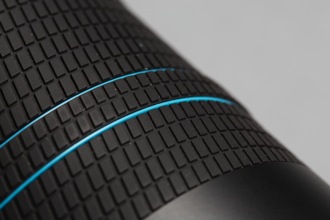
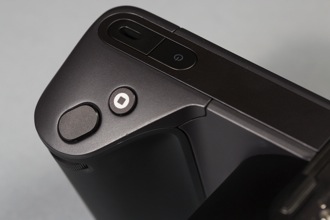
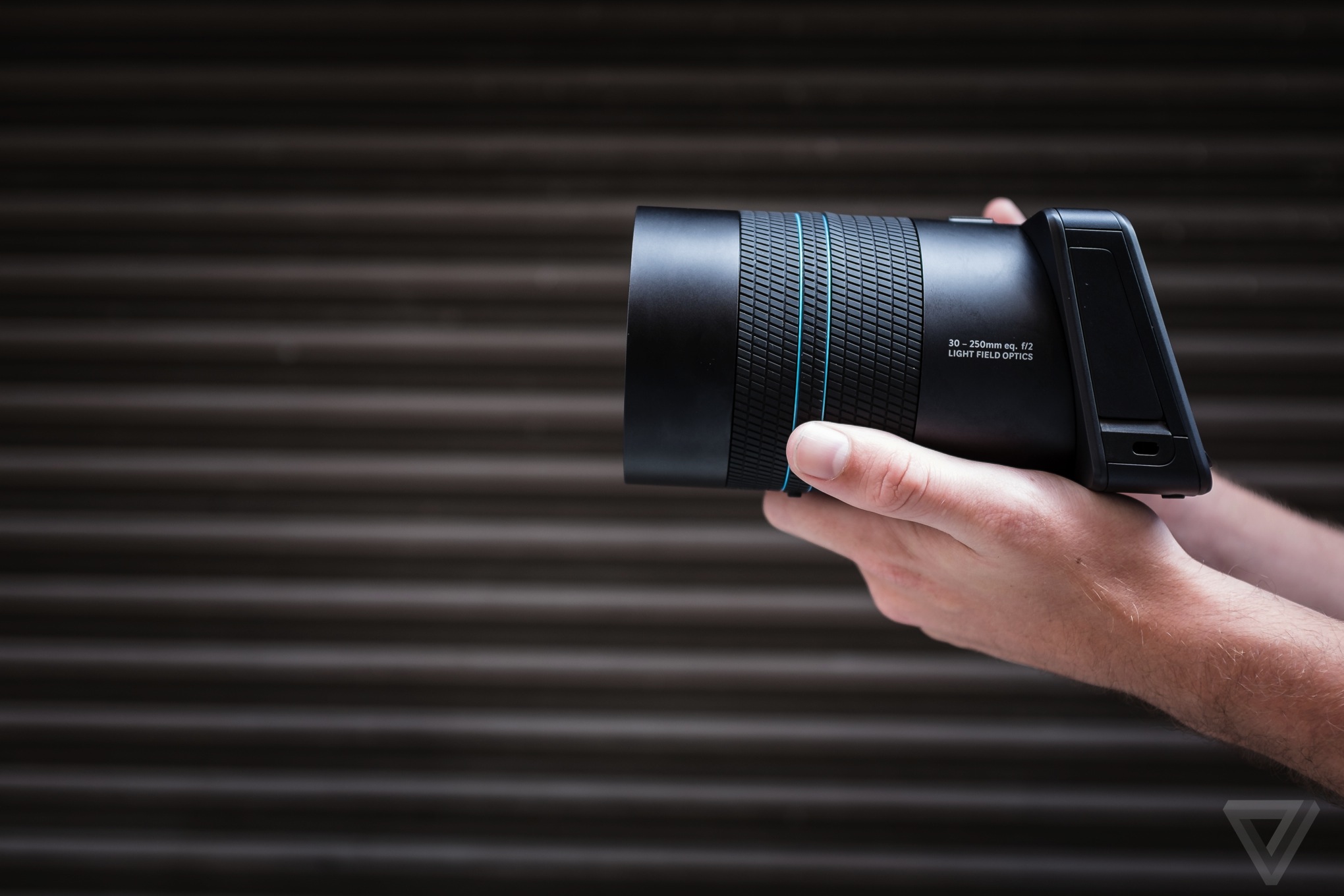
The Illum’s design is a perfect microcosm of what this device is supposed to be: the marriage of present and future, emphasis on the future. It looks, in a reductive sense, like a DSLR: there’s a big, cylindrical lens on the left side of the camera, a round grip on the right, buttons and a screen on the back, and a hotshoe on the top. You’re meant to hold it in your right hand with your left underneath the lens, spinning the two dials to zoom and focus. (In fact, it’s so heavy that using both hands is pretty much a necessity.) There’s no mistaking the Illum for anything but a camera.


There’s also no mistaking it for any other camera. Partly because its slanted back (designed so you can see the screen while you hold the camera at chest-level) gives the Illum a vaguely aggressive look, like it’s coming for you and your loved ones. Partly because the matte gray body with blue accents looks like it maybe fell from a spaceship or was lifted from the set of Battlestar Galactica. The Illum is big, bulky, and almost intimidating. I love the way it looks.


On that slanted back, next to four customizable buttons and a scroll wheel (there’s another one on the front, too), there’s a sharp, articulating 4-inch LCD. This is where you navigate the Illum’s menus (such as they exist), where you pick among the few options available to you as you shoot. There’s no viewfinder, and few buttons — it’s on the screen that everything interesting about light-field photography takes place.


Check out our ongoing gallery of photos from the Lytro Illum

There are more complicated and nuanced ways to describe it, but at its core light-field photography is just a more powerful and detailed way of capturing light. Instead of capturing it on a single plane, freezing an image in time and space, a light-field camera also captures the direction in which light was moving. Its processor then essentially renders a 3D scene, complete with the knowledge of distance between objects. A light-field photo represents not only everything in the scene, but a spatial understanding of the things in it.


Armed with all that data, Lytro’s core innovation was to offer a way to refocus your photo after it’s been shot. Over time, Lytro also added the ability to subtly shift perspective on an image, as if you’re moving your head around slightly. It gives photos a certain depth, an immersiveness that is a lot of fun to play with. Lytro rolled out 3D processing, too, and has much more planned; everything comes as updates to the software you use to view the photos, so your photos just get better over time. You don’t just look at Lytro’s "living pictures" — you explore them.


All the light-field technology, particularly the "microlens array" that captures light and direction, sits inside the Illum’s massive lens. It extends from 30-250mm, and shoots everything at f/2 but later offers the ability to stop down as far as f/16. It’s one of the most versatile lenses I have ever used, equalled only by the Sony RX10 and a small handful of others. That much range is rare, especially with an aperture that fast, and it makes almost any shot possible with the Illum. Its shutter can fire as fast as 1/4000th of a second, which neatly solves the horrific slowness of the previous model. It can focus on things literally touching the lens. There’s not a burst mode so much as a keep-pressing-down-and-it-shoots-sort-of-quickly mode, but it works fine so long as you’re not shooting the last play of the Super Bowl.


Except it never really feels like everything’s working properly. If I captured too many shots too quickly, the camera would freeze or crash spectacularly. Once, I framed and fired a shot, and all the Illum recorded was black. The touchscreen picks odd moments to be slow or just unresponsive. Each image takes a few seconds to process, after which it either will or won’t refocus when you tap on the screen for no reason. The Illum’s autofocus is basically nonexistent, meaning you’re stuck manually focusing for every shot. There’s no image stabilization, so if you’re zoomed in you either need a tripod or the world’s steadiest hands. It feels like every time you push the Illum, try to explore its capabilities, it just breaks down. And if there’s one way to immediately alienate the customer who’s most likely to part with $1,500 for this camera, it’s to build a product that can’t hack it under pressure.


This is Lytro’s biggest problem, the most frustrating thing about the Illum. It’s made for and sold to professional photographers, those pushing at the creative edges of their profession. It can’t replace a DSLR (though I wish it could), and Lytro knows that. But buyers with $1,500 to spend on a second or third camera want certain things: fine manual control, quick access to settings, sharp images, adaptive performance to any conditions, easy processing, and much more. In way too many places, the Illum doesn’t deliver to the expectations of its target audience.


Shooting with the Illum requires a complete rewiring of the way you look at a scene. A great living picture has two subjects, one in the foreground and one in the background. I began trying to fill every photo with as many things as possible, to put a telling detail or funny image right behind the subject of my photo. The Illum has its own set of rules for how to get a great shot; it comes with a huge, fun, strange learning curve, and it’s unlike any camera I’ve ever shot with. You’re shooting with layers, shooting something that people will be able to interact with later.


When it works, the Illum is capable of producing really remarkable pictures. (It still doesn’t shoot video, though Lytro says that’s not far away.) It still stumbles in low light — I avoided shooting above ISO 1000 — but as long as the conditions are right you get good, accurate colors, and impressive dynamic range. And that Lytro moment, when you shift focus from the person in the foreground to the city in the back or from the tip of their finger to their smiling face, never stops being amazing. But images are never quite tack-sharp as you move the focus around (Lytro says any given spot maxes out at four megapixels), making it look as if everything’s out of focus rather than in focus. That makes Lytro’s living pictures totally impractical for printing or exporting as simple JPGs, and even dulls the magic of refocusing.


There’s a button on the camera to help you maximize the effect, helpfully called the Lytro Button. (Using it is only recommended in moderation, since it turns the thousand-shot battery into something more like dozens.) It displays on top of whatever you’re shooting, showing the depth range of your photo with scattered dots. Blue represents the closest part of the shot that you’ll be able to get in focus; orange is the farthest away you’ll be able to make sharp.


For a few days, I used the Lytro button for every shot, but eventually, I trained my eyes to see what the Illum’s lens sees. The distance between subjects; the story I could tell racking from one to the other; the sense of space and size I could create with perspective. I started shooting faster and more confidently, and still got great shots.


Unfortunately, shooting is only half the battle. The other half is the Lytro Desktop software, which is currently somewhere between flawed and unusable. It’s designed to be sort of a lighter version of Lightroom, offering simple organization and editing tools. You can change white balance and sharpness and contrast and more within the app itself, and even export photos to Lightroom itself for heavier editing. It’s all fairly straightforward.


As with the shooting process, though, there’s more to think about with living pictures than just colors and light. Lytro offers "animations," which let you walk through certain transformations — a focus shift here, a perspective move there, zoom in — and then export the finished process as a movie. It’s like the Ken Burns effect to infinity, manipulating the most manipulable photos ever.


It’s all well-conceived, but there are two problems with Lytro Desktop. One: you need huge power to run it with any kind of success. Each 53MB light-field picture takes about 30 seconds to import and 5 seconds to open, and stutters endlessly while it’s being edited — and that’s on the gaming powerhouse MSI laptop Lytro loaned me during my review. Which, by the way, froze and crashed repeatedly, and at one point completely lost its library and just booted up blank. That’s the second problem: in its current form, Lytro Desktop is kind of broken. Eventually, I’m told, there will be mobile apps (I’ve seen a preview build, which worked quite well) that will allow you to view and maybe one day edit compressed versions of the photos. Here’s hoping that’s a better option.


For every great shot I captured, processed, and uploaded, there were just too many false starts, too many crashes, too many frustrations. They make the future seem much further away.


Wrap-up


Lytro Illum


Good Stuff
Cool, futuristic design
Light-field photography is the future
Helpful tools for showing you how to shoot
Perfect shots feel like magic


Bad Stuff
Hardware and software both way too buggy
Expensive
Images are heavy, and slow to import and edit
Misses the perfect image more often than it gets it


Every once in a while, the Lytro Illum blew my mind. I’d take just the right picture at just the right moment, and I’d suddenly have it captured in a way that felt more real, more alive than anything else I could’ve done. For every one of those moments, though, there were three or four moments where I felt like I missed it: I didn’t get the shot right in time, or it didn’t have the right composition or light. I just wound up with a plain-old photo, and not a particularly good one. Too many times I wound up wishing I’d just grabbed my phone.


I’m more convinced than ever that light-field photography is the next step in how we take, share, and view pictures, and that it’s going to be a big one. Sure, most phones can blur spots in a photo and make it look like it’s shifting focus, but the light field’s ability to mix photography and computer graphics offers a much bigger and more powerful future than that. But the $1,499 Lytro Illum is not the product that will usher us into the brave new world. For the most enterprising photographers, its many headaches might be worth it for the results that it can sometimes deliver. But it’s too expensive for the average user, too frustrating for the time-crunched professional, and not quite high-quality enough for the pickiest of photographers. So who, then, is it for?


It’s for a museum somewhere, on display as the first real product in what might someday turn into something world-changing. Lytro is doing remarkable work and the Illum is another clear step forward in its vision. But it’s not a great camera. Not yet, anyway.


Photography by Michael Shane and Sean O'Kane. Additional testing and reporting by Sean O'Kane.


The Breakdown

More times than not, the Verge score is based on the average of the subscores below. However, since this is a non-weighted average, we reserve the right to tweak the overall score if we feel it doesn't reflect our overall assessment and price of the product. Read more about how we test and rate products.


Hardware / design
7


Image quality
6


Interface / controls
8


Features
7


Performance
3


[% var len = Math.min(data.comments.length, data.settings.autoUpdateAlertMaxShown) %]
[% for (var i = 0; i

[%= comment.user.display_name %]

[% if (comment.parent) { %]
replied to [%= comment.parent.user.display_name %]
[% } else { %]
posted a new comment
[% } %]

[% } %]

[% if (data.comments.length > data.settings.autoUpdateAlertMaxShown) { %]

[% } %]


Shazam for Mac brings instant music recognition and more to your menu bar


9to5Mac

Shazam for Mac brings instant music recognition and more to your menu bar

Shazam for Mac brings instant music recognition and more to your menu bar | 9to5Mac


Apps & Updates


Screen Shot 2014-07-31 at 3.05.04 AM


Shazam, the popular music identification app for iOS that was recently integrated into iOS 8’s updated version of Siri, has launched a new Mac application that resides in the menu bar listening for music to identify. Once it has detected a song, you’ll get a notification with the name, artist, and more of the music being played.


After a song is identified, you can also get instant access to the lyrics, music video, or iTunes Store link to buy it for yourself. You can also share tagged songs on various social networks.


Shazam for Mac is a free download on the Mac App Store.


';
jQuery('body').append( content );
} else if ( ! navigator.userAgent.match(/iPhone/) && ! dd_banner_cookie ) {
var content = '';
jQuery('body').append( content );
var $hide = jQuery( document.getElementById( 'hide-dd-banner' ) );
$hide.on( 'click', function( event ) {
event.preventDefault();
var $ddBanner = jQuery( document.getElementById( 'daily-deal-banner' ) ),
date = new Date();
date.setDate(date.getDate() + 10); // add 10 days to today to expire the cookie.
var value = "true; expires=" + date.toUTCString() + "; path=/";
document.cookie = "hide-dd-banner=" + value;
$ddBanner.animate( {left:'-50px'} );
});
}


European TV Giant RTL to Acquire Majority Stake in Video Ad Firm SpotXchange‎


TV & Video - Yahoo News Search Results

European TV Giant RTL to Acquire Majority Stake in Video Ad Firm SpotXchange‎

The unit of German media giant Bertelsmann ‎takes 65 percent in the marketplace for digital video ads for $144 million plus possible additional payouts. read more